Table of Content
Never ignore professional medical advice in seeking treatment because of something you have read on the site. If you think you may have a medical emergency, immediately call your doctor or dial 911. If you experience any of these symptoms, see a doctor for an evaluation. Catching cubital tunnel syndrome in the early stages means conservative treatment might resolve the problem before complications develop. Swelling and cysts adjacent to the elbow joint can also enhance your chances of dealing with cubital tunnel syndrome. This test checks nerve and muscle function and may be used to test the forearm muscles controlled by the ulnar nerve.
Those muscles in your hand help you perform fine movements such as typing on a keyboard and playing a musical instrument. Although the cause of cubital tunnel syndrome is not always known, it may be due to repetitive movements or putting too much pressure or tension on the nerve. The ulnar nerve is a nerve in the arm that travels from the neck down to the fingers. Its name refers to its location near the ulna bone, which is on the little finger side of the forearm.
How do you get rid of ulnar nerve entrapment?
You may also have permanent numbness, weakness, pain, and tingling in your wrist or hand. Cubital tunnel syndrome is mainly caused by traction and pressure but can also be caused by ischemia of the ulnar nerve. The main symptoms of pain & paraesthesia in the fourth and fifth finger and pain in the medial aspect of the elbow is caused by the compression of the ulnar nerve. You may have cubital tunnel syndrome if your ulnar nerve is compressed or irritated at the elbow.

The ulnar nerve is also responsible for sensation in the fourth and fifth fingers of the hand, part of the palm and the underside of the forearm. Ulnar nerve entrapment can cause pain, numbness and tingling in the forearm and the fourth and fifth fingers. Cubital tunnel syndrome is numbness, tingling, and pain in the elbow to the fingers, caused by pressure on a nerve in the elbow. Non-surgical treatment includes modifying activities, medication, and bracing.
Cubital Tunnel Syndrome Exercises to Relieve Pain
Cubital tunnel syndrome can cause an aching pain on the inside of the elbow. Elevating the arm above heart level and moving the fingers are important to prevent swelling. Diminished sensation and fine motor control in the hand causing the person to drop objects or have difficulty in handling small objects. A cross-sectional study of 441 adults.” Journal of Occupational and Environmental Medicine, US National Library of Medicine. If you have been diagnosed with cubital tunnel syndrome, one of the first steps you must take is to avoid any action that can aggravate your symptoms.

Loosely wrapping a towel around your arm with tape can help you remember not to bend your elbow during the night. Avoid leaning on your elbow or putting pressure on the inside of your arm. For example, do not drive with your arm resting on the open window.
Reducing your risk of cubital tunnel syndrome
The ulnar nerve travels down the back of the elbow behind the bony bump called the medial epicondyle, and through a passageway called the cubital tunnel. The cubital tunnel is a narrow passageway on the inside of the elbow formed by bone, muscle, and ligaments with the ulnar nerve passing through its center. The roof of the cubital tunnel is covered with a soft tissue called fascia.
Additionally, a doctor may advise anti-inflammatory medications to help reduce swelling. The symptoms of cubital tunnel syndrome may resemble other medical conditions or problems, including medial epicondylitis (golfer's elbow). The symptoms of cubital tunnel syndrome may seem like other health conditions or problems, including golfer's elbow .
In addition, doing some exercises like elbow bend, head tilt, elbow flexion, and wrist extension may help treat this problem. However, consult your doctor before opting for any alternative medicine. The treatment options for cubital tunnel syndrome include nighttime splinting to prevent flexing the elbow all the way up as well as hand therapy for nerve gliding exercises. Some patients who start to have persistent numbness or weakness in their hand from long-term compression of the nerve may require surgical release of the nerve at the elbow.
Once cubital tunnel syndrome is diagnosed after clinical examination, EMG etc the doctor may suggest conventional treatment to begin with. Few natural tips are effective in alleviating pain, numbness, and tingling sensation. The symptoms aggravate when direct pressure is applied on the nerve. Resting the inner side of elbow on armchair for long hours can put pressure on nerve and produce tingling and numbness feeling in the forearm.
Menthol, the active component of peppermint oil, has analgesic and anti-inflammatory properties. Hence, the topical application of peppermint oil can alleviate the frequency as well as the degree of pain in the affected muscles . Individuals affected by cubital tunnel syndrome may experience the following signs and symptoms.
Running from your neck to your hand is a nerve called the ulnar. It helps you control muscles and feel sensations in your forearm, hand and fingers. Cubital tunnel syndrome happens when that nerve is irritated or compressed. A compressed ulnar can cause various uncomfortable and severe symptoms that, if left untreated, can lead to muscle weakness and atrophy. According the Postgraduate Medical Journal, cubital tunnel syndrome is the second most common peripheral nerve entrapment syndrome next to carpal tunnel.
Cubital tunnel syndrome develops in people of all ages. It affects twice as many men as women, though researchers don't know why. Non-steroidal anti-inflammatory medications may be taken. Steroid injections are not usually used since they can damage the nerve. Take OTC pain relievers or anti-inflammatory medications. Don't rest on your elbows, especially on a hard surface.
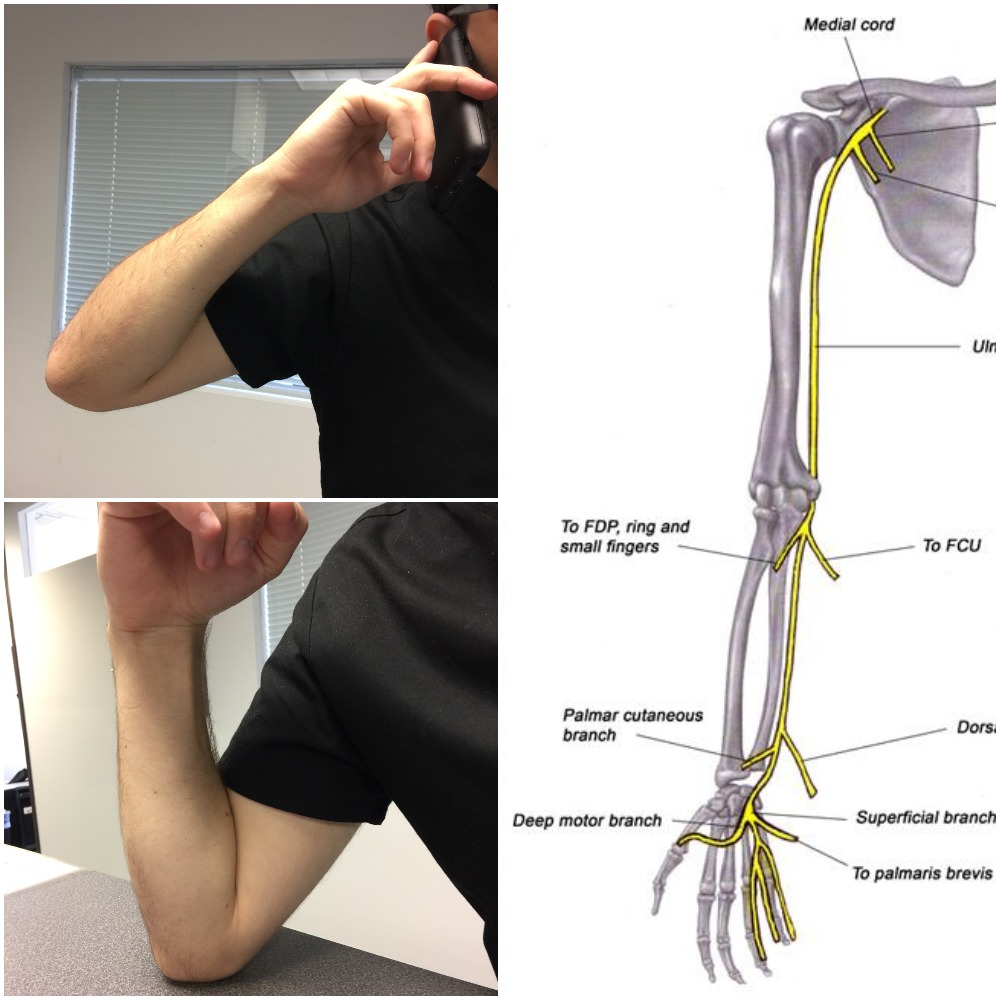
The ulnar nerve starts in the side of your neck and ends in your fingers. With your arm in front of you and the elbow straight, curl your wrist and fingers toward your body, then extend them away from you, and then bend your elbow. Unless your nerve compression has caused a lot of muscle wasting, your doctor will most likely first recommend nonsurgical treatment. At the elbow, the ulnar nerve travels through a tunnel of tissue that runs under a bump of bone at the inside of your elbow. Treatment involves releasing the pressure on the ulnar nerve through non-surgical methods or if required, by surgery. Cubital tunnel syndrome is a medical condition that can cause numbness or tingling in the ring and small fingers, pain in your forearm, or even weakness in the hand.
All these symptoms usually occur when the elbow has been kept bent for a long time. I realized that my upper trapezius was stiff and my pec muscles were tight. Bending the elbow past 90 degrees increased the tingling in my right pinky so I avoided holding my phone in my right hand. Here’s what I did to treat my own ulnar nerve irritation. Avoid resting the elbows on armrests or furniture while working. Gently and slowly bend your elbow, raising your fists up toward your chest, hold for a moment and slowly release.

In general, most people recover well after cubital tunnel surgery. The most important thing is to discuss all the risks and benefits with your orthopedic surgeon before proceeding to a surgical treatment option. Increased arm numbness or tingling while typing or writing. Increased finger numbness or tingling while typing or writing. “Pins and needles” sensation in the hand, arm or fingers. The ES6™ elbow bracing sleeve provides medical grade orthopedic support.




No comments:
Post a Comment